
For pool projects
Check the license before you sign anything
Nikic is a licensed general contractor (CGC), not a pool-only contractor (CPC) — a distinction worth understanding before you hire anyone, and one you can verify yourself in about a minute.
The license distinction, and what it actually means for a pool
Most pool companies in Florida hold a CPC — a Certified Pool Contractor license, which authorizes pool construction specifically. A CGC — Certified General Contractor — is the broadest license the state issues: any building type, any height, commercial or residential. Nikic holds a CGC.
Here is what that does and doesn’t mean. Under Florida Statute 489.113(3)(c), a general contractor is not required to subcontract structural swimming pool work, and plumbing and electrical must always go to the appropriate licensed trades. In practice, Nikic subcontracts the pool work itself — all of it — to licensed, insured pool trades.
So this is not a claim that a CGC replaces a CPC, or that Nikic’s own crew builds your pool. What Sasa does is the part that happens before anyone digs: reading the soil and the flood requirements against the design, specifying the shell and the foundation that carries it, and vetting the trades who execute it. On a coastal lot, that is the half of the job that decides whether the pool is still level in ten years.
You can check any contractor’s license — CGC or CPC, active or lapsed, any complaint history — on the Florida DBPR license lookup in under a minute. Do that before you sign anything, with any contractor, not just this one.
Why the structural half is the half that goes wrong
A pool is a concrete shell sitting in the ground, and on the coast the ground is the hard part — high water table, soft or variable soil, and on many lots a flood zone with its own elevation requirements. That’s a structural engineering problem before it’s a finish problem.
Neither a CPC nor a CGC license requires an engineering background. Sasa’s civil engineering degree is what supplies it: he applies the same structural training to the pool shell that he applies to a house’s foundation drawings — the pile foundation where the soil calls for one, and the equipment placement against current flood code, the same code that’s why so much pool equipment installed at grade didn’t survive Helene and Milton.
None of this is reversible once the gunite shoots. It’s a decision made before the shell is even poured, and it’s the reason the foundation work is the line item worth asking hard questions about, not the finish.
What protects your money while the project runs
Line-item pricing, not a lump sum you have to trust. A payment schedule tied to actual progress, not to a calendar.
And lien releases from the subcontractors — issued at every draw when your bank or you ask for them, and in all cases before the final draw is released. That matters because an unpaid subcontractor can file a claim against your property even after you have paid the contractor in full. The release is the document that closes that exposure.
None of this is unusual to ask for. It’s unusual for a pool contractor to offer it before you ask.
How long a pool actually takes
Once the permit is issued, eight to twelve weeks, depending on the size and complexity of the pool. The permit comes first and its timeline varies by municipality — that part is worth asking about specifically, because it is where most of the uncertainty lives.
After surveyors mark the exact pool location, the build runs through six inspections, each of which has to pass before the next stage proceeds:
- Pre-construction
- Pre-pour steel, for the pool cage
- Underground plumbing
- Electrical bonding
- Barrier and enclosure
- Final
None of that is unusual. But a schedule built without accounting for all six is how a quoted eight-to-twelve weeks turns into six months — and it is worth asking any contractor to walk you through the sequence before you sign, not after.
The track record behind it
Nikic’s home-construction work is documented and checkable — not a separate business, the same operational standard applied to a different scope. Every pool Nikic has built has gone in alongside a custom home, engineered as part of the same structure rather than dropped in beside it.
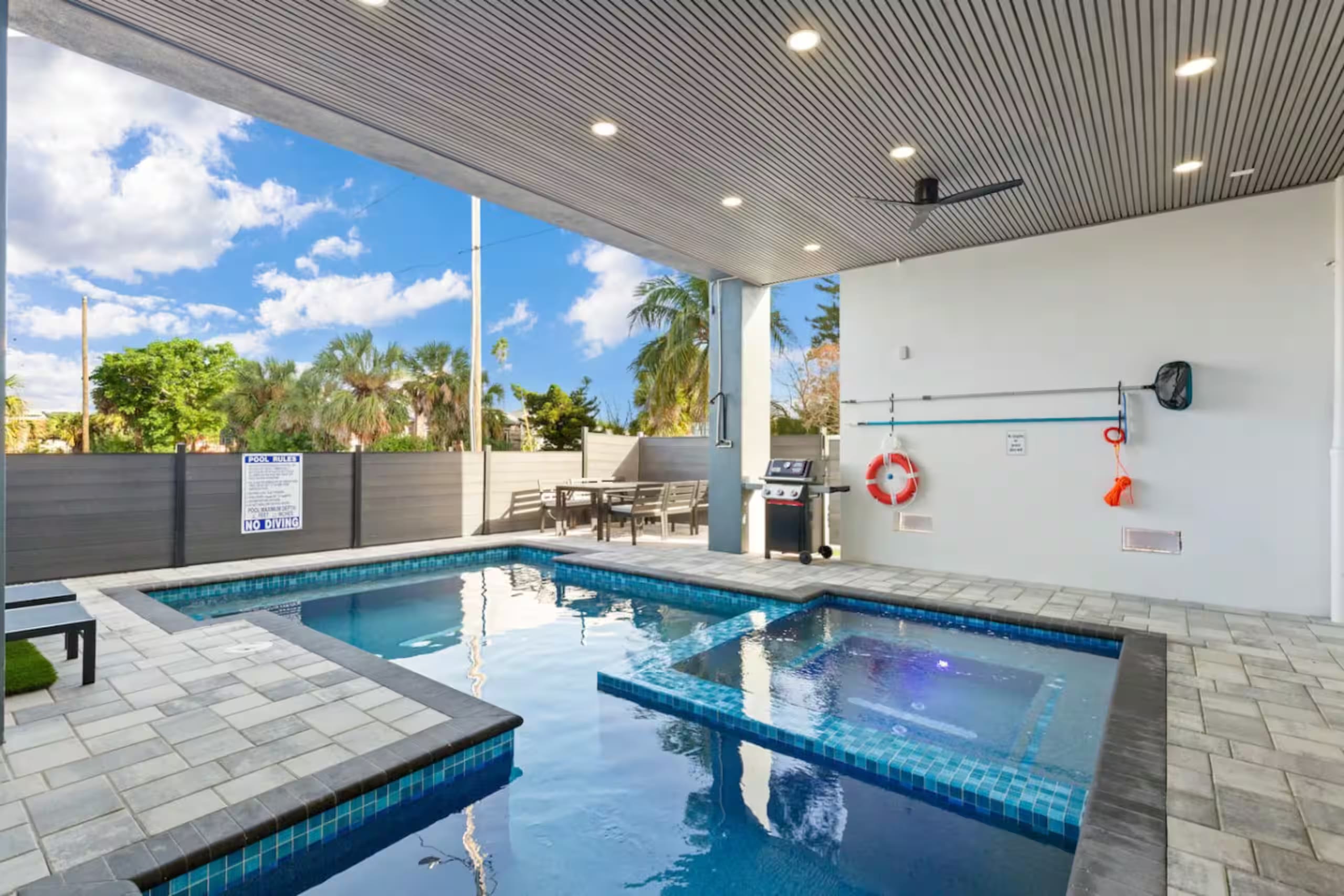
Covered pool and spa · under the structure
Treasure Island
Roughly half the pool footprint sits beneath the second-floor living space — the pool shell and the building’s pile foundation engineered together.
See the project →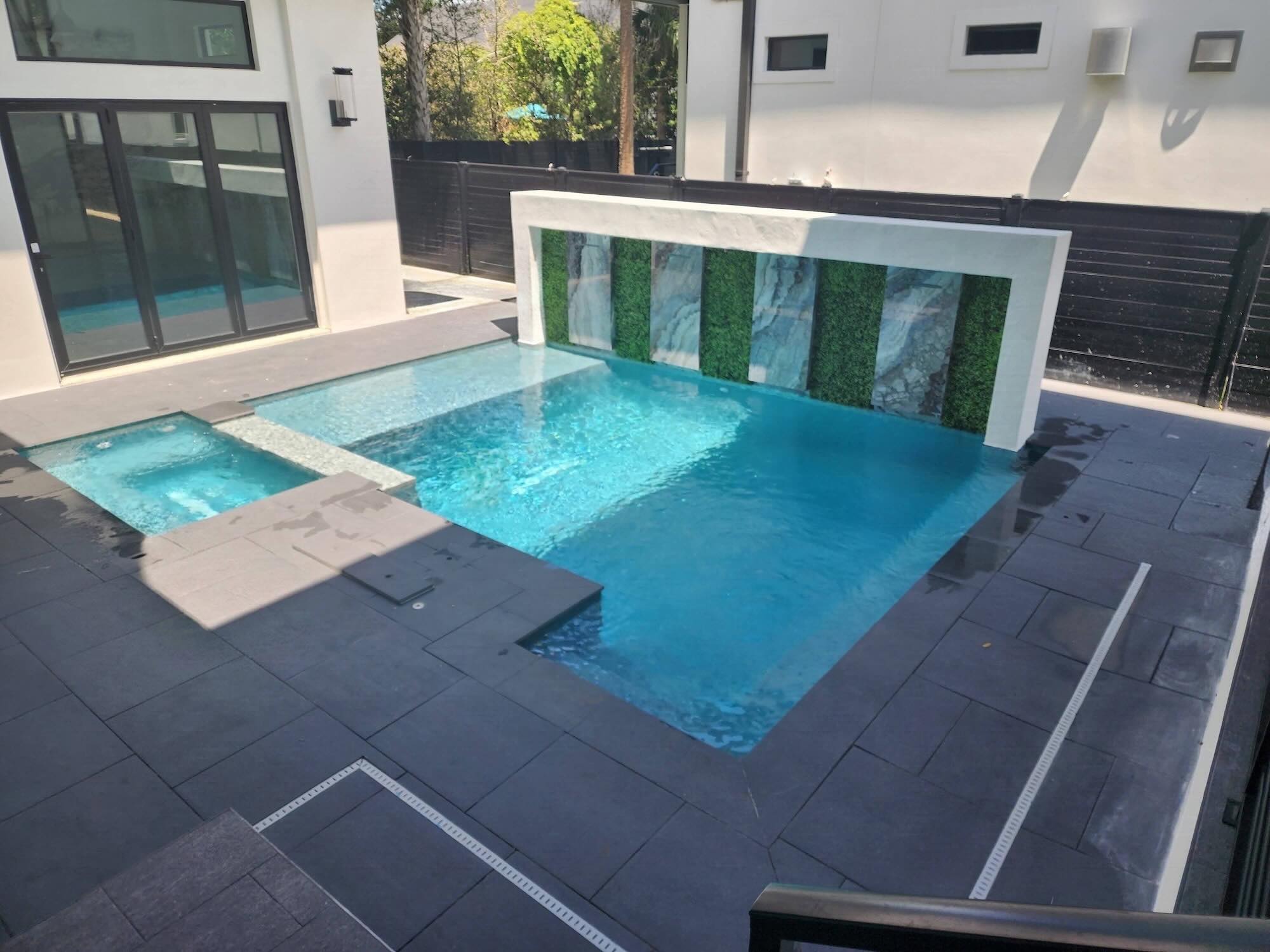
Pool and spa · rooftop terrace above
South Tampa
A pool and spa off the main living level with stone decking and a tiled accent wall, on a three-storey lot with a rooftop terrace above it.
See the project →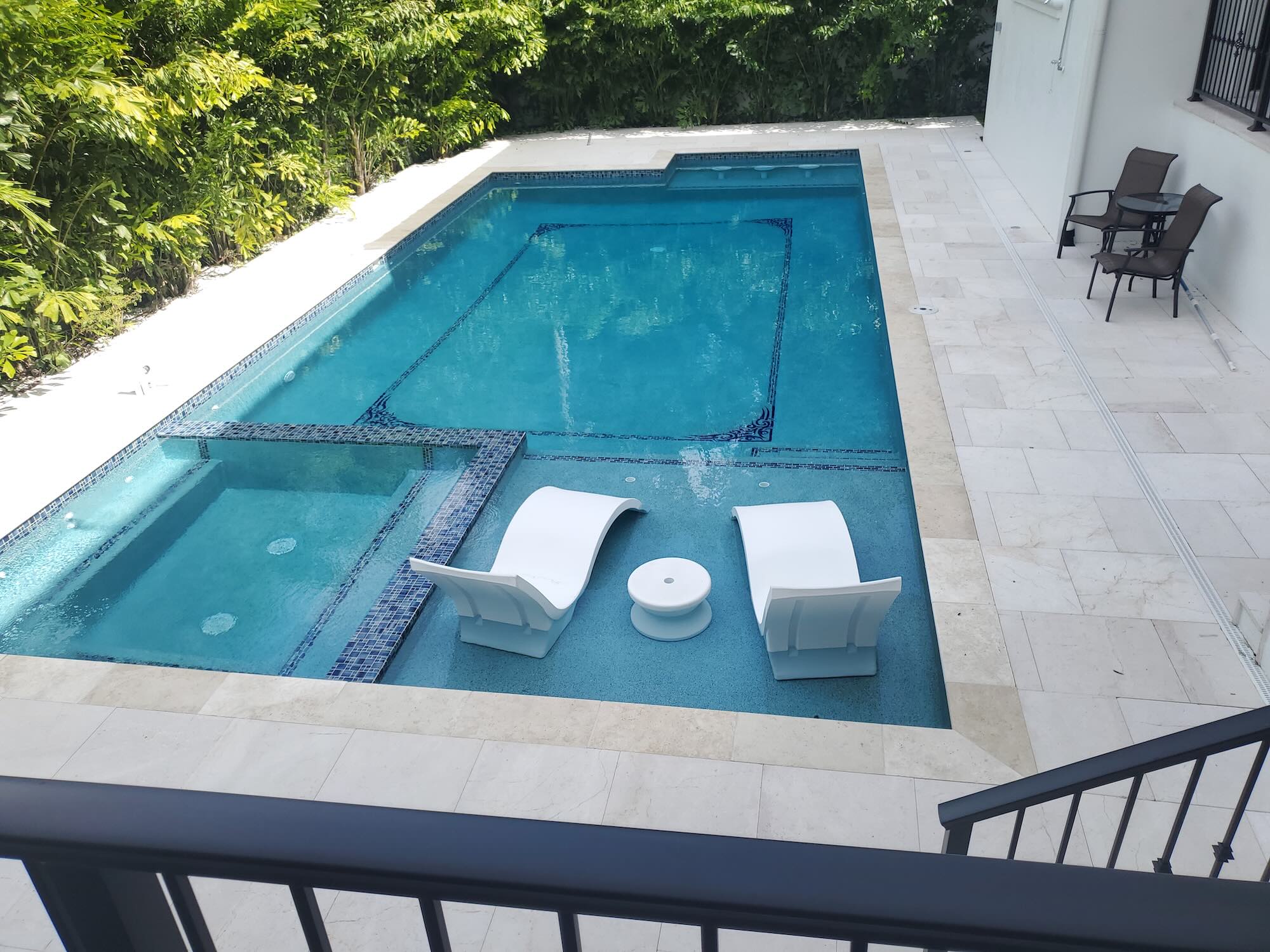
Tanning ledge · Flood Zone AE lot
Beach Park
A pool with a tanning ledge and decorative tile banding, bordered by stone pavers, on a lot that met its flood requirement with an elevated slab.
See the project →The Madeira Beach project also includes structurally integrated water features engineered under that same standard: a 5,000-gallon saltwater feature carrying a 20-ton point load, and a cantilevered jacuzzi on the third-floor balcony, both built under the same structural review as the bridge-grade home shell.
Where this fit is strongest: a pool alongside a home
Everything above applies to a standalone pool. But the case is strongest when the pool and the house are one project — which is how every Nikic pool has been built so far.
One contractor from the start means one engineering standard for both foundations, one permit relationship, and no seam between two companies who each know their own scope and not the other’s. On coastal lots where the pool shell and the house foundation sit in the same soil and need to move together rather than crack apart at the seam, that seam is the thing most likely to go wrong.
The same is true on a rebuild. Pool damage doesn’t count toward your home’s substantial damage calculation — the pool runs on its own parallel regulatory track — and most homeowners don’t discover that until partway through.
Have questions before you commit to anyone?
Send the project, and Sasa will answer directly — including questions about a contract you’re already considering with someone else.