
Once your determination is settled, there are three real options: repair, rebuild from the ground up, or sell. Which of them are actually open to you is not a matter of preference. It depends on your jurisdiction’s determination and its threshold, and those vary city by city — check yours here before you plan around any of what follows.
One disclosure before the three. We sell exactly one of these paths: the rebuild. We do not lift houses, we do not do the repair work behind a lift, and we do not sell real estate. Read what follows knowing that, and weigh it accordingly.
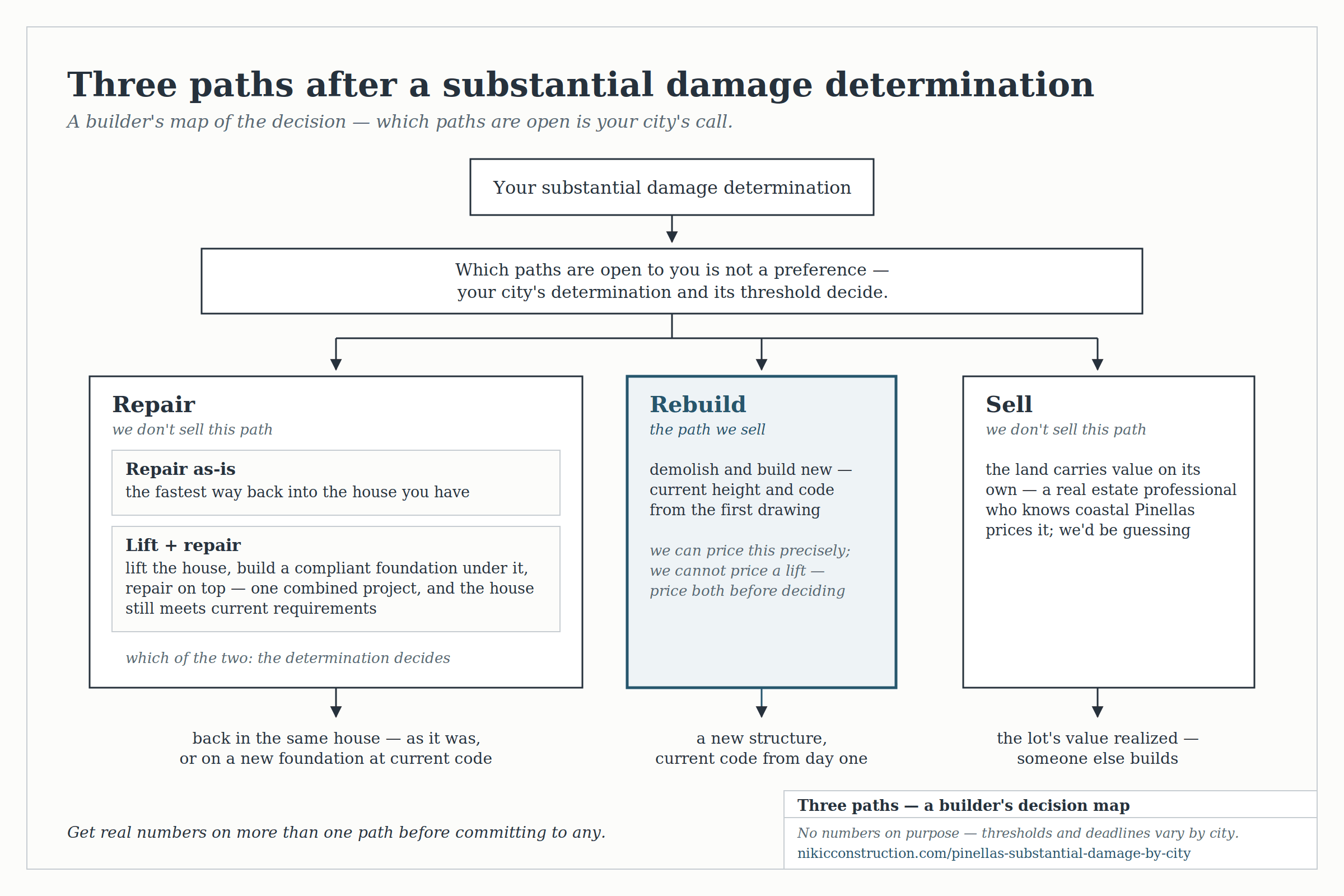
Repair — and when repair means lifting the house
If your determination leaves straightforward repair open, it is the fastest way back into your house and it keeps everything you have. It is also the wrong answer if the structure underneath has problems a repair does not touch, because the same decision comes back after the next storm, on a house that is one storm older.
Over the threshold, repair does not disappear — it grows. In practice it usually means lifting the house and repairing it as one combined project, not two separate decisions: lift the structure, build a compliant foundation under it, set it back down, and do the repair on top. Which side of that line you are on is your jurisdiction’s call, not yours or ours — that is what the determination and your city’s threshold decide.
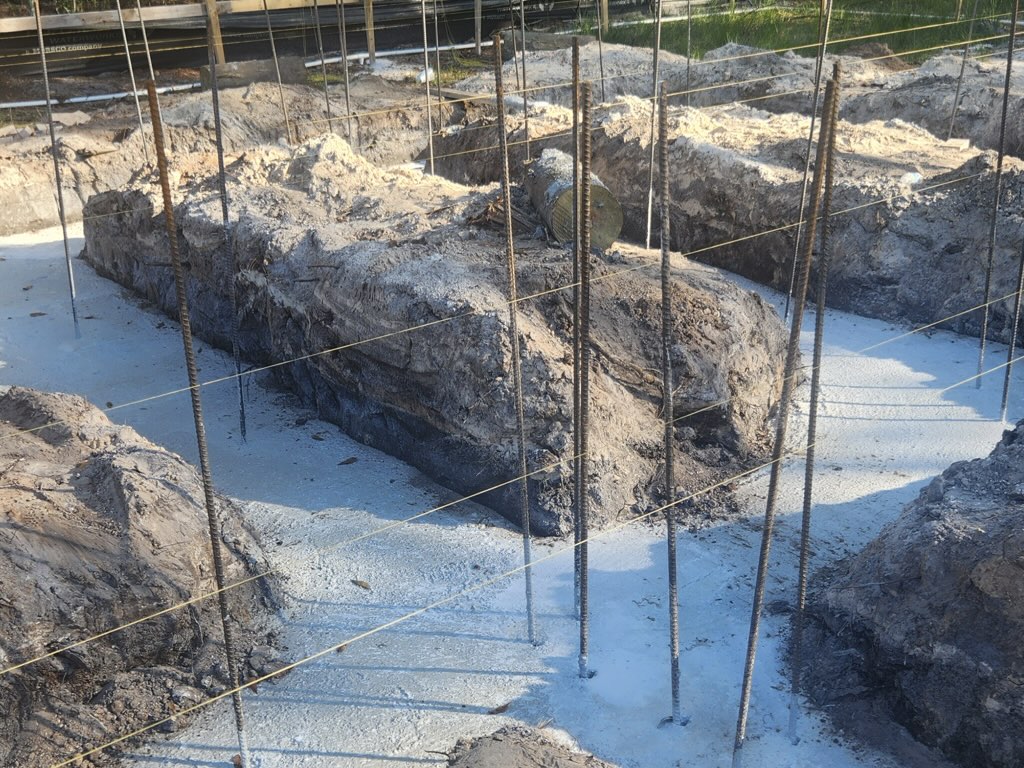
Whether your house is a realistic candidate is a structural question, not a preference: the building has to be sound enough to survive its own lift. There is a second question underneath that one: a footer that has spent its whole life resting on soil now has to span between support points, and whether it can is something a lifting contractor determines by excavating and examining it — not something anyone should assume from the curb.
We do not do this work. We never have, and we have no plans to. Sasa has lifted bridges — hydraulic jacks, bearing replacements, traffic still running overhead — and that experience is exactly why he will tell you houses are a different trade. He has met one house-lifting contractor in passing, across the street from one of our builds, and he will not hand you a name he cannot vouch for. If lifting is your best path, you want a firm that does it every day, and you should make them earn the job the same way you would make us earn a rebuild.
Here is the part people miss, and it comes from watching these projects rather than from a rulebook: lifting is not a shortcut around compliance. In the projects Sasa has seen, a lifted house still has to meet current requirements — impact-rated windows and doors, a roof structure and tie-downs that meet today’s standards, pile support underneath, breakaway walls where the lot calls for them. So the honest question is how close your structure already is, because that is the difference between a bare lift and a lift-and-repair. If the house was built near current standards and height is the main problem, a bare lift can be the sensible path. If the foundation, the walls, the openings, and the roof all need work to get there, the repair behind the lift is most of the house, and the math starts pointing somewhere else.
Rebuild
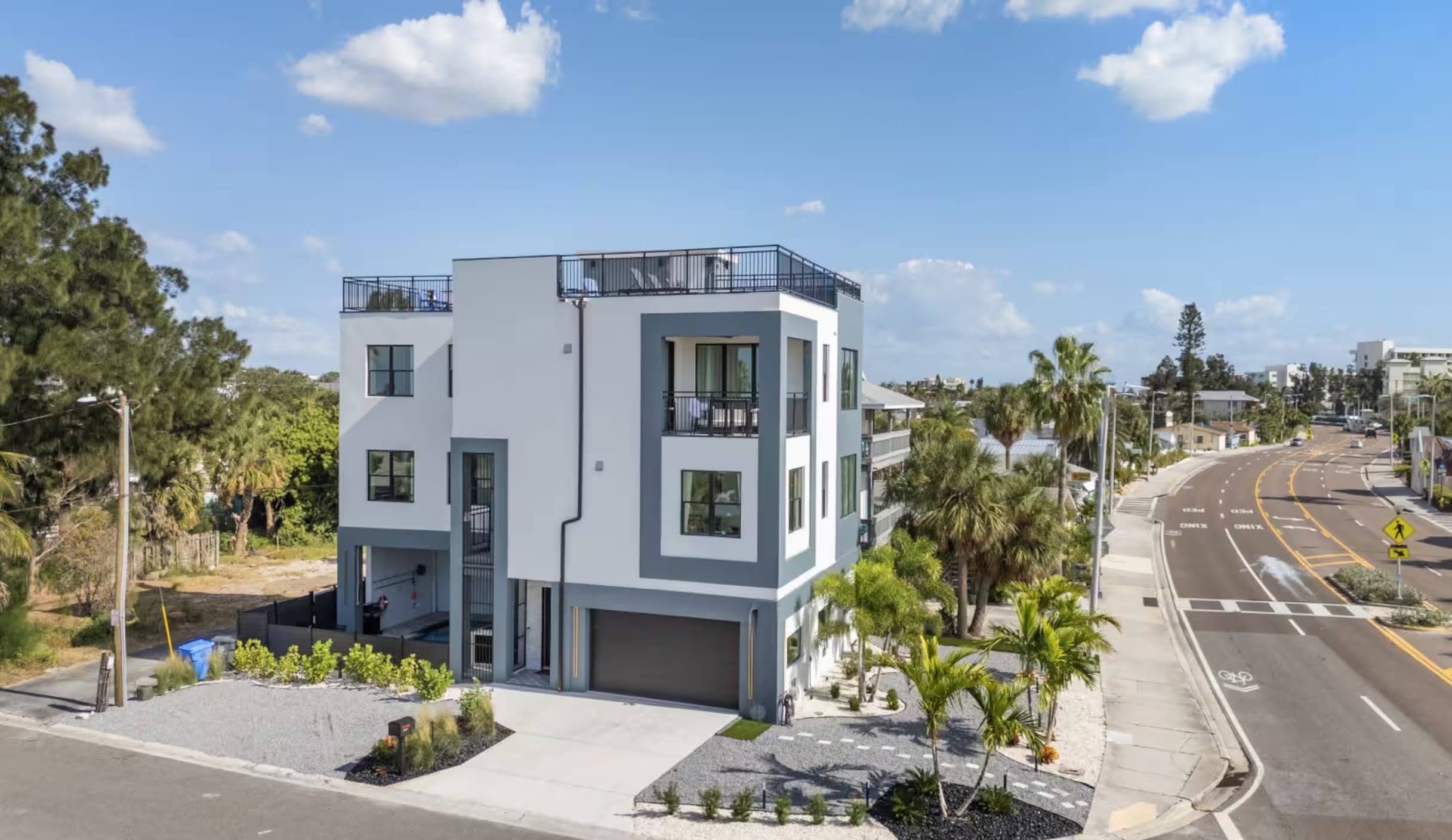
Full demolition and reconstruction, built to current height and code from the first drawing instead of retrofitted toward it. This is our business, so here is exactly where our judgment is worth something and where it is not.
We can price a new build precisely, because we build them. We cannot price a lift, and we will not pretend to. Sasa’s read, from the projects he has seen, is that when a structure needs the works — foundation, walls, openings, roof — starting over is often the cleaner economics. But his read is not a substitute for a number. Get a lifting firm’s real price before you decide, and put it next to a real rebuild price. If the gap is small, the newer structure usually earns it. If the gap is large, that is information, and you should use it. Demolition, for what it is worth, is part of our scope on a rebuild — you do not need to arrange it separately. What a rebuild involves with us, first call to keys, is here.
Sell
Selling the damaged property, land included, is a legitimate outcome, not a failure. Coastal lots carry value independent of what is standing on them. We do not broker sales, and we would be guessing at what yours nets — a real estate professional who handles damaged and land-value sales in coastal Pinellas would not be guessing. Talk to one before you rule this path out or in.
What Sasa asks in a first meeting
Before he has seen the property, the questions are the same every time. Do you have the determination letter, and is there a current appraisal of the property? Are you happy with the house you have — its layout, its size — or was it never quite right? Will you live in it, or is it an investment or a short-term rental? What is the budget, what is the timeline, and how is it being financed — insurance claim, bank, or your own money?
The answers usually point at a path faster than any article can, this one included. That is why the questions come before the pitch.
Where this leaves you
Get the determination confirmed. Get a structural read on whether your house can take a lift. Get real numbers on more than one path before committing to any. And do it soon — there are deadlines attached to these decisions, they differ by city, and they are closer than most people assume. The city-by-city page is where to check yours.
If rebuild is genuinely the answer, that is our work. If it is not, we would rather tell you that now than after you have signed something.